I. Key Functions
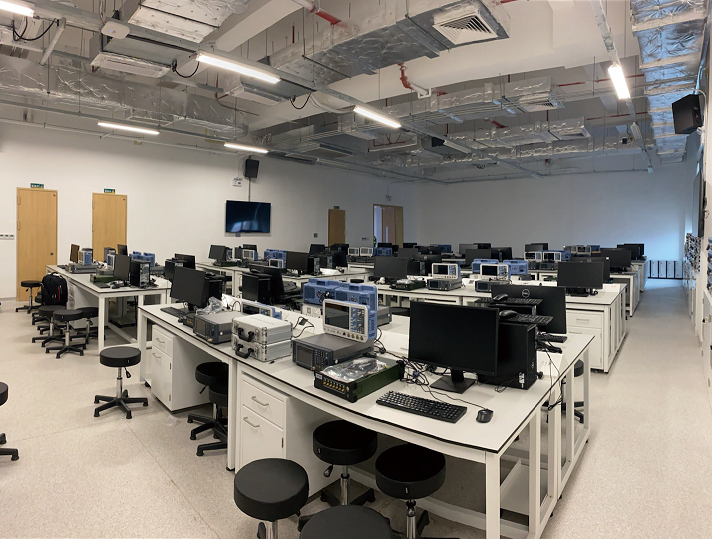
(1) Provides a unified experimental platform for radar and communications courses in electronics, communications, information engineering, and related disciplines.
(2) Offers an open platform for student innovation design or faculty research, supporting rapid prototyping of common communication and radar systems, as well as real-time validation of novel algorithms.
(3) Features reconfigurability and upgradability, enabling extension to other courses and support for remote virtual laboratory instruction.
II. Overall Objectives
(1) Aligned with professional training goals and curriculum structure, this initiative establishes a comprehensive, multi-layered laboratory capable of covering experimental content for core courses including “Principles of Communications”, “Principles of Radar”, and “Electronic Warfare”, while remaining upgradeable to meet teaching and experimental requirements for new courses over the next 3–5 years.
(2) Designed to support the talent development objective of “solid foundational knowledge and broad disciplinary scope”, the laboratory integrates foundational verification experiments, comprehensive design experiments, and innovative research experiments into a hierarchical experimental teaching framework. Related theories and principles from course materials are visualized using flow diagrams, enabling “verifiable principles” and helping students progressively grasp radar principles and radar signal processing concepts—from surface-level understanding to deep mechanistic insight.
(3) Serves as an innovation hub for student electronic competitions, innovation projects, course design assignments, and capstone thesis work.
(4) Provides faculty with a high-performance, architecture-open research platform.
III. System Configuration
The system includes:
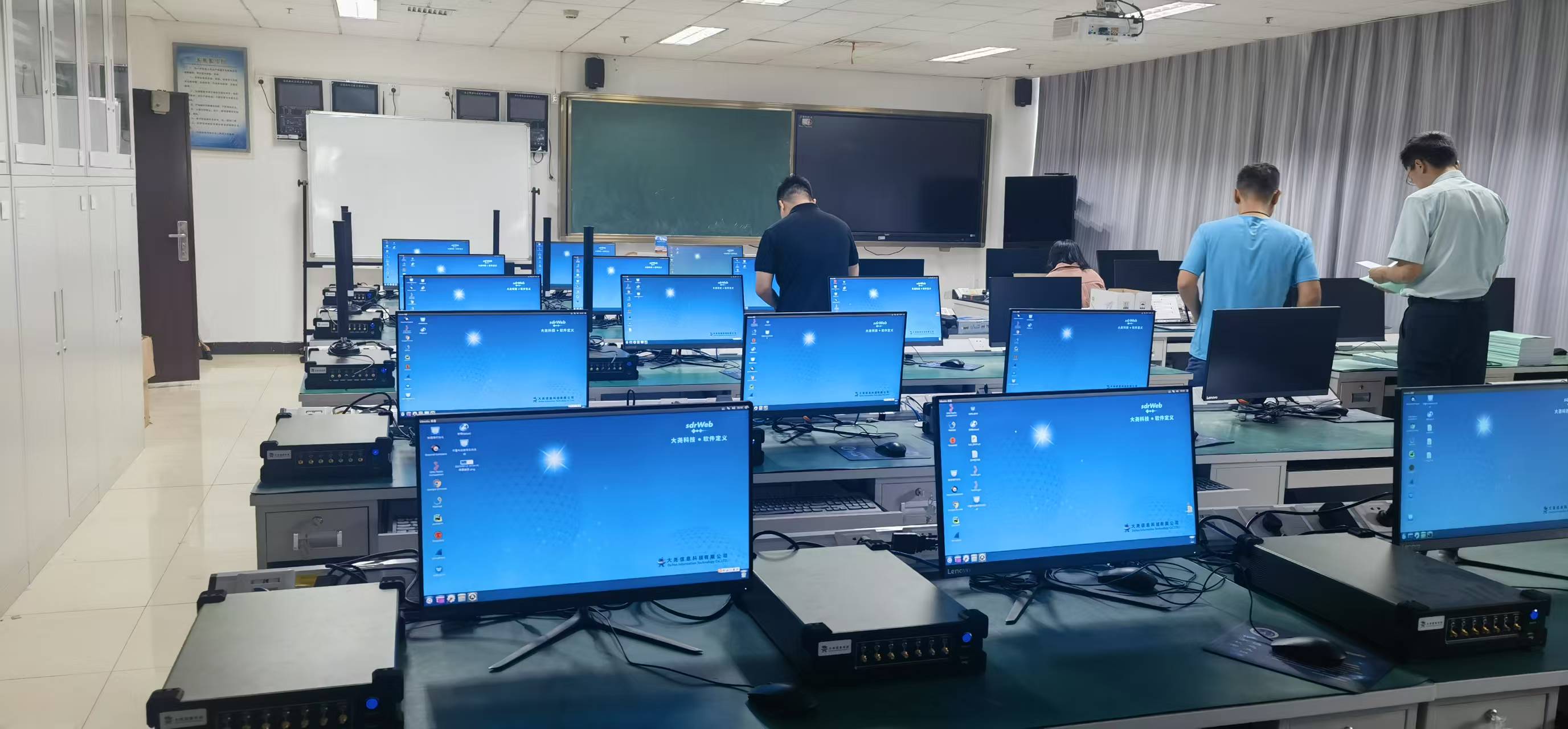
(1) 20 wireless transceiver units;
(2) 20 desktop computers;
(3) One signal simulation server with accessories;
(4) One signal switching device;
(5) One LCD display unit;
(6) One set of teaching and experimental system software;
(7) One experiment case library, along with corresponding experiment manuals.
The system architecture diagram is shown below:
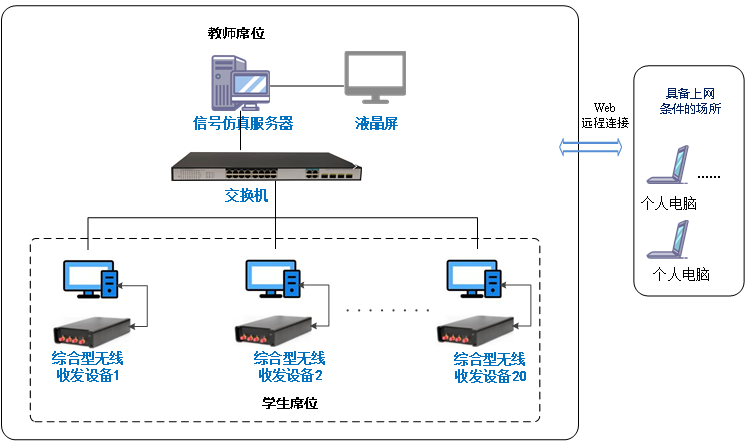
Twenty desktop computers are individually connected to twenty wireless transceiver units, forming twenty student workstations. Each workstation can conduct experiments independently or collaborate with others for signal transmission/reception experiments and electronic warfare experiments (e.g., jamming and anti-jamming). The signal simulation server serves as the instructor’s workstation, responsible for user management and case library administration. It connects to each student workstation via a switch, enabling monitoring of experimental progress and recording of experimental data across all workstations. It also interfaces with the LCD display for scenario management, control, and visualization, and supports remote virtual experiment execution.
IV. Core Courses
Aligned closely with the talent development objective of “solid foundational knowledge and broad disciplinary scope”, this platform establishes a three-dimensional experimental teaching system centered on “Principles of Communications”, “Principles of Radar”, and “Electronic Warfare”:
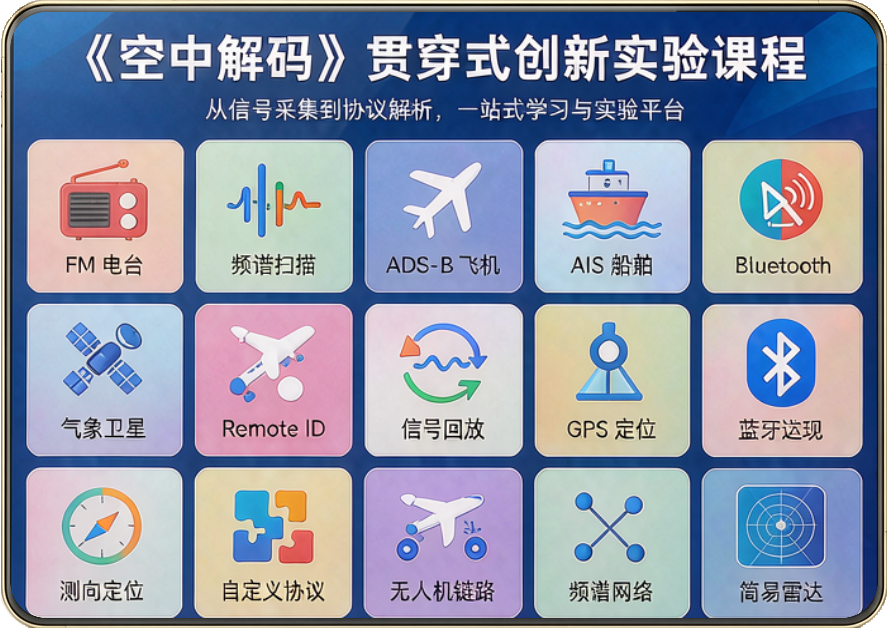
(1) “Principles of Communications” emphasizes in-depth analysis and verification of digital signal transmission chains and modulation/coding techniques;
(2) “Principles of Radar” focuses on visualizing electromagnetic wave detection mechanisms, waveform processing, and array algorithms via flow diagrams—enabling students to progressively master core principles;
(3) “Electronic Warfare” extends the above two domains into reconnaissance, jamming, and anti-jamming strategy research under complex electromagnetic environments.
Through a hybrid physical-virtual experimental approach, these three courses organically integrate foundational verification, comprehensive design, and innovative research experiments. This not only fulfills end-to-end teaching and research needs—from prototyping common systems to real-time algorithm validation—but also provides students with innovation practice platforms for electronic competitions and capstone projects, while offering faculty robust support for high-level, architecture-open research.