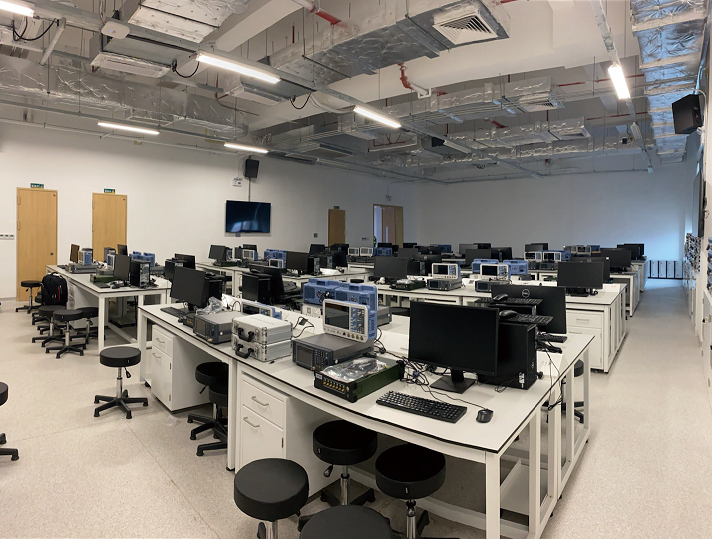
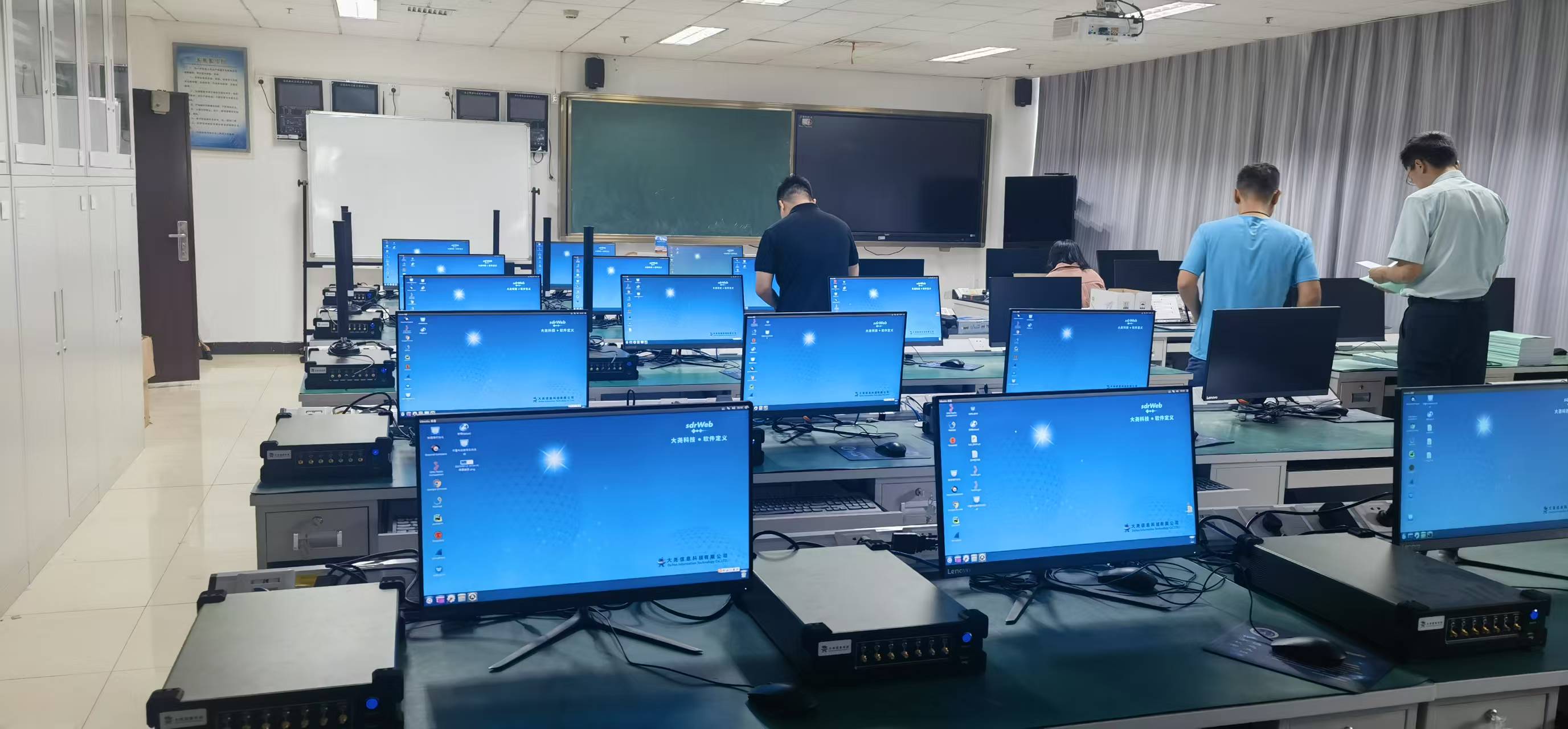
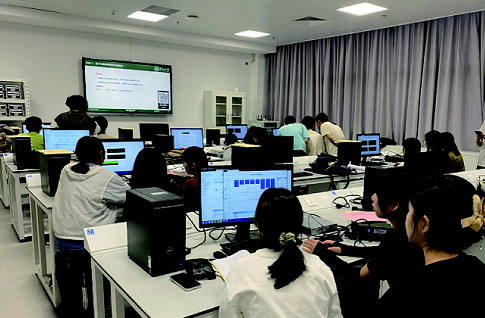
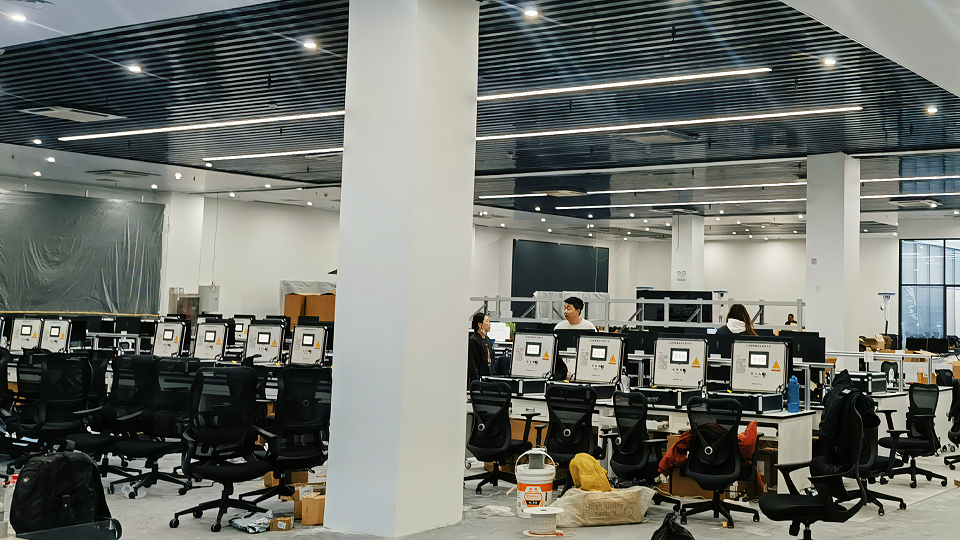
This course is a comprehensive, tiered, and innovation-oriented wireless communication practice curriculum built on the Tianwen Qiming platform and powered by the Tianwen Visual Designer. It spans all academic levels—from freshman undergraduate to graduate studies—and integrates four core learning tiers: foundational introduction, principle analysis, security offense/defense, and innovative R&D. It addresses key pain points of traditional communication lab courses—fragmentation, over-theoretical focus, and homogeneity. Leveraging real electromagnetic environment signal resources, the course features instant visualized interactive feedback, standardized validation assessments, and open-ended customizable experiments, establishing a closed-loop practical teaching system that is “progressive, application-oriented, and innovation-driven.” It supports diverse educational scenarios including regular classroom instruction, hands-on training, course assessment, academic competitions, and capstone projects.
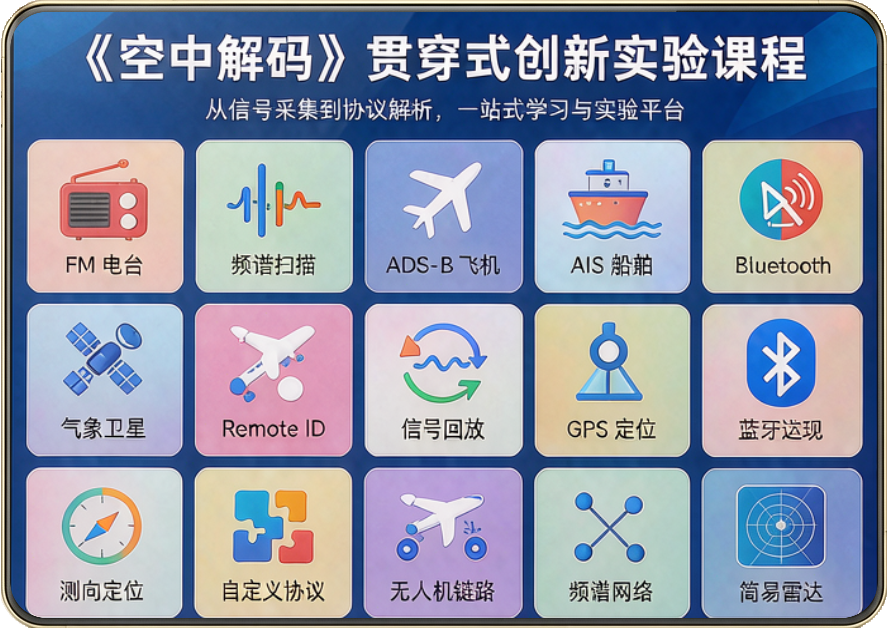
I. Core Course Features
This course breaks through the traditional communication lab limitations of “theory-heavy, practice-light, innovation-absent,” featuring four core pillars: integrated tiered instruction, realistic scenario-based practice, visualized real-time teaching, and open innovation empowerment—forming a full-chain talent development framework spanning foundational cognition, professional depth, security application, and independent innovation.
(1) Full-Academic-Level Integrated Training Covers the entire academic journey from freshman undergraduate to graduate studies, integrating four progressive tiers—foundational introduction, principle analysis, security offense/defense, and innovative R&D—with tightly connected, ladder-like experiments forming a complete knowledge-and-competency development system for wireless communication.
(2) Real Electromagnetic Environment Practice Leverages authentic electromagnetic environment signal resources, enabling students to conduct experiments in real-world signal scenarios—moving beyond the limitation of “simulation-only” approaches and significantly enhancing engineering practical capability.
(3) Visualized Real-Time Teaching Powered by the Tianwen Visual Designer, it delivers immediate visualized interactive feedback, transforming abstract wireless communication principles into intuitive auditory and visual experiences—effectively lowering entry barriers to specialized learning.
(4) Standardized Validation & Assessment Includes built-in standardized validation and assessment mechanisms supporting course evaluation and competency measurement, ensuring teaching quality is quantifiable and traceable.
(5) Open Innovation Empowerment Provides open-ended customizable experiment capabilities, empowering students to independently design experimental protocols and build communication systems—fully supporting cultivation of advanced innovation talent.
II. Course Configuration
The course adopts an integrated configuration of “platform support + software compatibility + hardware assurance + case empowerment,” balancing stability, professionalism, and flexibility, as detailed below:
(1) Core Platform Tianwen Qiming Platform—provides the computational foundation for real electromagnetic environment signal acquisition and processing, ensuring stable and smooth operation of experiments across all academic levels.
(2) Core Software Tianwen Visual Designer—a graphical, reconfigurable experiment design tool supporting real-time visualized interaction and open customizable experiments.
(3) Hardware Assurance Complementary RF transceiver and direction-finding equipment, supporting centralized classroom instruction, group training, and field/remote access across multiple operational scenarios.
(4) Case Resources A library of 17 integrated experiments covering four tiers: introductory experience, signal analysis, protocols & security, and innovative practice—directly aligned with teaching and research applications.
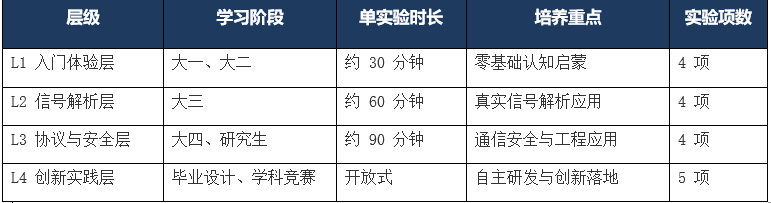
Course System Tier Overview:
III. Course Structure and Core Experiments
The course employs an integrated modular design, with four interlinked, progressively advancing tiers comprising a total of 17 core experiments, as follows:
L1 Introductory Experience Tier (Freshman & Sophomore)
Focused on zero-base cognitive initiation, emphasizing engaging, lightweight experiments—including FM radio reception, walkie-talkie communication, spectrum exploration, and remote-control signal capture—to rapidly introduce students to core foundational concepts such as frequency modulation, spectral characteristics, wireless encoding, and basic communication modes, thereby building a solid professional cognitive framework.
· FM Radio: Understand frequency modulation through intuitive auditory feedback during FM broadcast reception.
· Walkie-Talkie Communication: Experience basic communication modes and walkie-talkie signaling principles.
· Spectrum Exploration: Recognize spectral characteristics by observing real-time spectral distribution of ambient wireless signals.
· Remote-Control Signal Capture: Understand wireless encoding by capturing and decoding wireless signals from common remote controls.
L2 Signal Analysis Tier (Junior)
Focused on deepening professional principles, emphasizing analysis and application of real-world signals. Through hands-on projects—including ADS-B aircraft tracking, AIS maritime vessel monitoring, weather satellite image reception, and FM micro-broadcasting—students gain in-depth understanding of mainstream wireless communication protocols (aviation, maritime, satellite, short-range Bluetooth), mastering core professional skills such as data verification, channel broadcasting, and signal analysis—enabling a transition from “recognizing signals” to “interpreting signals.”
· ADS-B Aircraft Tracking: Learn aviation protocols by tracking real-time aircraft broadcast signals.
· AIS Vessel Monitoring: Learn maritime protocols by monitoring Automatic Identification System (AIS) vessel signals.
· Weather Satellite Image Reception: Receive downlink signals from weather satellites and decode cloud imagery.
· FM Micro-Broadcasting: Build a simple FM broadcast system to practice channel broadcasting and modulation.
L3 Protocols & Security Tier (Senior & Graduate)
Focused on communication security and engineering application, emphasizing protocol implementation, security offense/defense, and signal localization. Advanced experiments include Remote ID reception, signal replay attacks, GPS principle analysis, and spectrum direction-finding—aligned with national standards and cutting-edge industry applications such as cybersecurity and wireless electronic warfare. Students master communication protocol security mechanisms, signal attack/defense principles, and cooperative localization techniques—meeting senior-level professional training and foundational research skill development needs.
· Remote ID Reception: Identify unmanned aerial vehicle (UAV) Remote ID signals, addressing low-altitude airspace safety requirements.
· Signal Replay Experiment: Conduct signal replay attacks to understand communication security mechanisms.
· GPS Principle Experiment: Analyze GPS positioning principles and master satellite navigation technology.
· Spectrum Direction-Finding: Apply cooperative localization techniques to achieve signal direction-finding and geolocation.
L4 Innovative Practice Tier (Capstone Projects & Academic Competitions)
Focused on independent R&D and innovation implementation, offering fully open experimental design permissions. Students may undertake custom protocol communications, UAV link analysis, spectrum situational awareness networking, Bluetooth device discovery, or simplified radar experiments—encouraging them to transcend fixed experimental frameworks, independently design protocols, construct communication systems, and deliver professional analytical reports and physical prototypes—comprehensively empowering high-level innovation talent development.
· Custom Protocol Communication: Design and validate a proprietary communication protocol end-to-end.
· UAV Link Analysis: Analyze characteristics of UAV communication links.
· Spectrum Situational Awareness Networking: Construct a distributed spectrum situational awareness network.
· Bluetooth Device Discovery: Detect and decode Bluetooth device signals.
· Simplified Radar Experiment: Build a simplified radar system and deliver a functional prototype.
IV. Teaching Application Scenarios
The course’s closed-loop practical teaching system flexibly adapts to multiple teaching and research contexts:
· Regular Classroom Instruction: Stepwise experiments align with theoretical lectures, transforming abstractions into tangible experiences.
· Hands-On Training: Group-based and centralized training enhances students’ engineering practice capabilities at scale.
· Course Assessment: Standardized validation and assessment mechanisms enable quantitative, traceable teaching quality evaluation.
· Academic Competitions: L4 Innovative Practice Tier supports student competition project development and prototyping.
· Capstone Projects: Open customizable experiments empower advanced research topics and physical deliverables.
· Research Onboarding: Real signal resources and reconfigurable designer support foundational undergraduate research training.
V. Supporting Services & Implementation Assurance
(1) Integrated Software-Hardware Delivery Delivers the complete package—including the Tianwen Qiming platform, Tianwen Visual Designer, RF hardware, and the 17-experiment case library—for immediate out-of-the-box use.
(2) Faculty Training & Curriculum Support Includes faculty training workshops, lab manuals, and syllabi—reducing instructor preparation workload for labs and lectures.
(3) Continuous Case Library Updates Iteratively refreshes experiments based on industry advancements and evolving national standards—ensuring course relevance and technical currency.
(4) Technical Support & Operational Maintenance Provides professional technical support and responsive maintenance services—guaranteeing long-term stable operation of platform, software, and hardware.
VI. Customer Value
This course meets both routine teaching and training needs for university programs in communication engineering, electronic information, IoT, and related disciplines, while also supporting personalized student development—including scientific innovation competitions, capstone projects, and research onboarding. It helps students build robust wireless communication expertise and cultivates interdisciplinary electronic information professionals equipped with engineering practice competence, security-aware thinking, and independent innovation capability.
Breaking Traditional Limitations: Resolves fragmentation, excessive theory-focus, and homogeneity—achieving “learning for application.”
Full-Chain Talent Development: Seamless progression from foundational cognition → professional depth → security application → independent innovation.
Multi-Scenario Adaptability: One unified curriculum covers teaching, training, assessment, competitions, capstone projects, and research.
Domestically Developed & Secure-by-Design: Built on the Tianwen platform and Visual Designer—supporting autonomous, controllable teaching and research infrastructure.