I. Key Features
The system comprehensively covers the entire electromagnetic signal teaching spectrum—from foundational verification to integrated design—centered on educational scenarios. Its core features are as follows:
(1) Reconfigurable Simulation Scenario Construction: Leveraging professional simulation software, users can flexibly reconstruct diverse electromagnetic signal scenarios—simulating signal propagation, reflection, and complex electromagnetic environments—to transform abstract theories into intuitive virtual environments, thereby enhancing students’ understanding of specialized knowledge.
(2) End-to-End Experimental Teaching Support: Covers all stages—“foundational verification → integrated design → innovative practice”—enabling students to perform hands-on operations, adjust parameters, and analyze results. This closed-loop pedagogy bridges theory and practice, strengthening students’ self-directed learning and design capabilities.
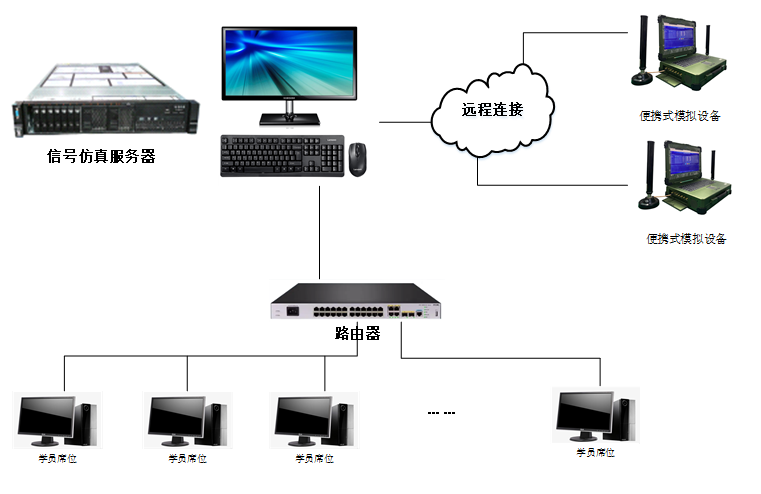
(3) Multi-Scenario Teaching Adaptability: Through a central router-based network, the system enables seamless coordination among the server and multiple student workstations—meeting classroom instruction and group lab requirements. It also supports remote access by two portable devices, extending training to field environments and eliminating spatial constraints.
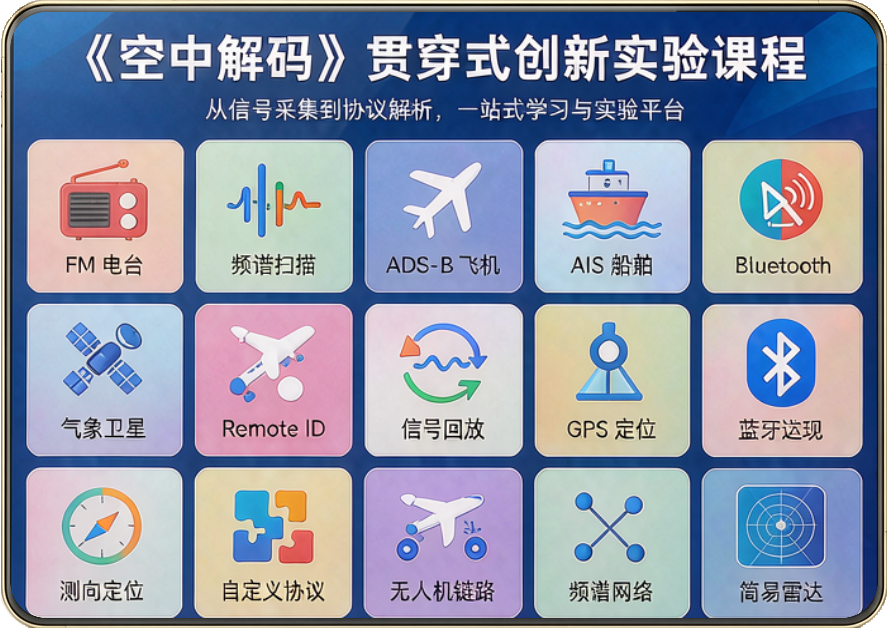
(4) Professionalized Experimental Case Library: Includes three course-aligned experimental case libraries, closely aligned with curricula and real-world engineering practice. These cases can be directly deployed for instruction, practice, and training—reducing instructor preparation workload while reinforcing students’ engineering practice mindset.
(5) Stable, Efficient, Collaborative Interaction: Built around the simulation server, the system ensures stable, lag-free concurrent and remote access for multiple users. It supports real-time synchronization and storage/replay of experimental data—facilitating instructor monitoring and enabling students to review and optimize their work.
II. System Configuration
The system adopts an integrated “core computing power + software support + networking & access” configuration—balancing stability, professionalism, and flexibility—as detailed below:
(1) Core Computing Equipment: One electromagnetic signal simulation server serves as the computational core, delivering high-performance data processing and signal simulation capabilities—ensuring smooth, precise simulations suitable for large-scale teaching and research applications.
(2) Professional Software Suite: Includes one professional electromagnetic signal teaching simulation software with an intuitive graphical user interface, supporting seamless integration with MATLAB; plus three accompanying experimental case libraries aligned with Digital Signal Processing, Communication Principles, and Radar Principles courses.
(3) Networking & Access Equipment: One central router connects the server and student workstations, ensuring high-speed data transmission; supports remote access by two portable electromagnetic signal simulation devices—adapting to diverse teaching scenarios.
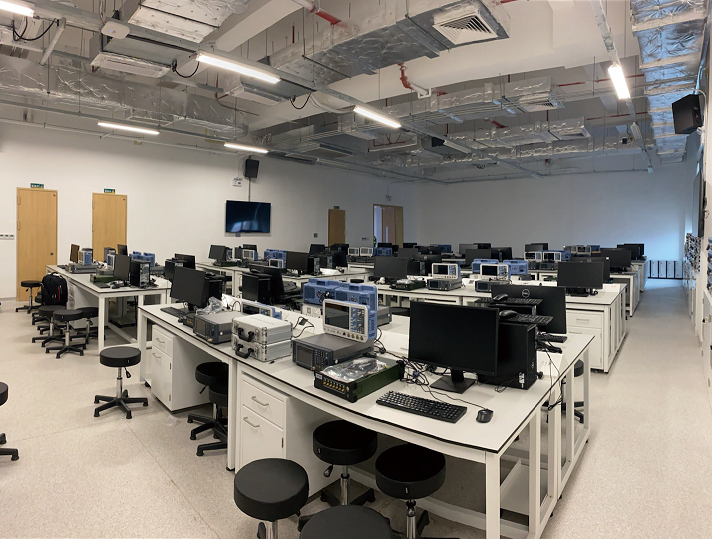
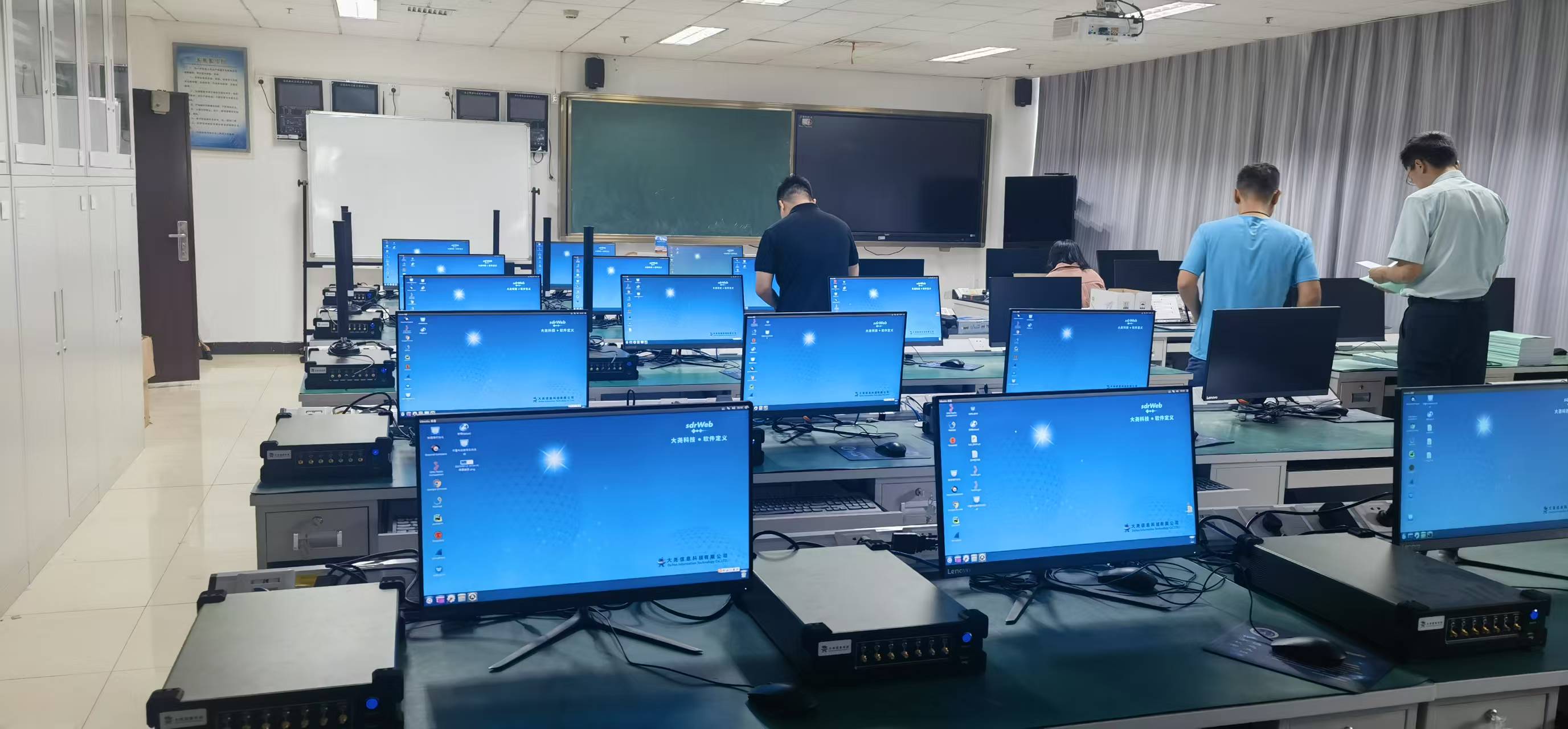
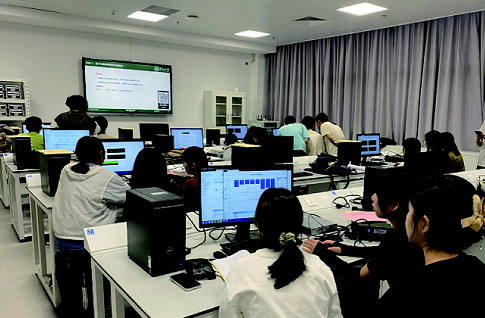
(4) Supporting Teaching Equipment: Multiple student workstation terminals enable independent experiment execution and data recording. The system is highly reliable and low-maintenance—ideal for routine teaching and training needs.
III. Primary Courses Supported
The system precisely aligns with core courses in Electronic Information Engineering, Communication Engineering, and related disciplines—leveraging simulation capabilities and case libraries to deliver professional practical support. Key supported courses include:
(1) Digital Signal Processing: Conducts foundational experiments—including signal acquisition, filtering, and Fourier transforms—as well as comprehensive experiments such as digital filter design. Visual demonstrations of time-domain and frequency-domain signal characteristics enhance students’ signal analysis and processing skills.
(2) Communication Principles: Simulates generation, transmission, and reception of various analog and digital communication signals; supports experiments on channel coding, modulation/demodulation, etc., helping students grasp communication system fundamentals and cultivate system design and optimization abilities.
(3) Radar Principles: Simulates radar antenna radiation patterns, target ranging and velocity measurement, and other key scenarios covering core radar technologies—aiding students’ understanding of radar signal mechanisms and advancing their engineering practice and innovation capabilities.
Additionally, the system supports flexible expansion of experimental cases and course coverage—empowering curriculum reform and research innovation, and contributing to the cultivation of high-caliber engineering and technical talent.